
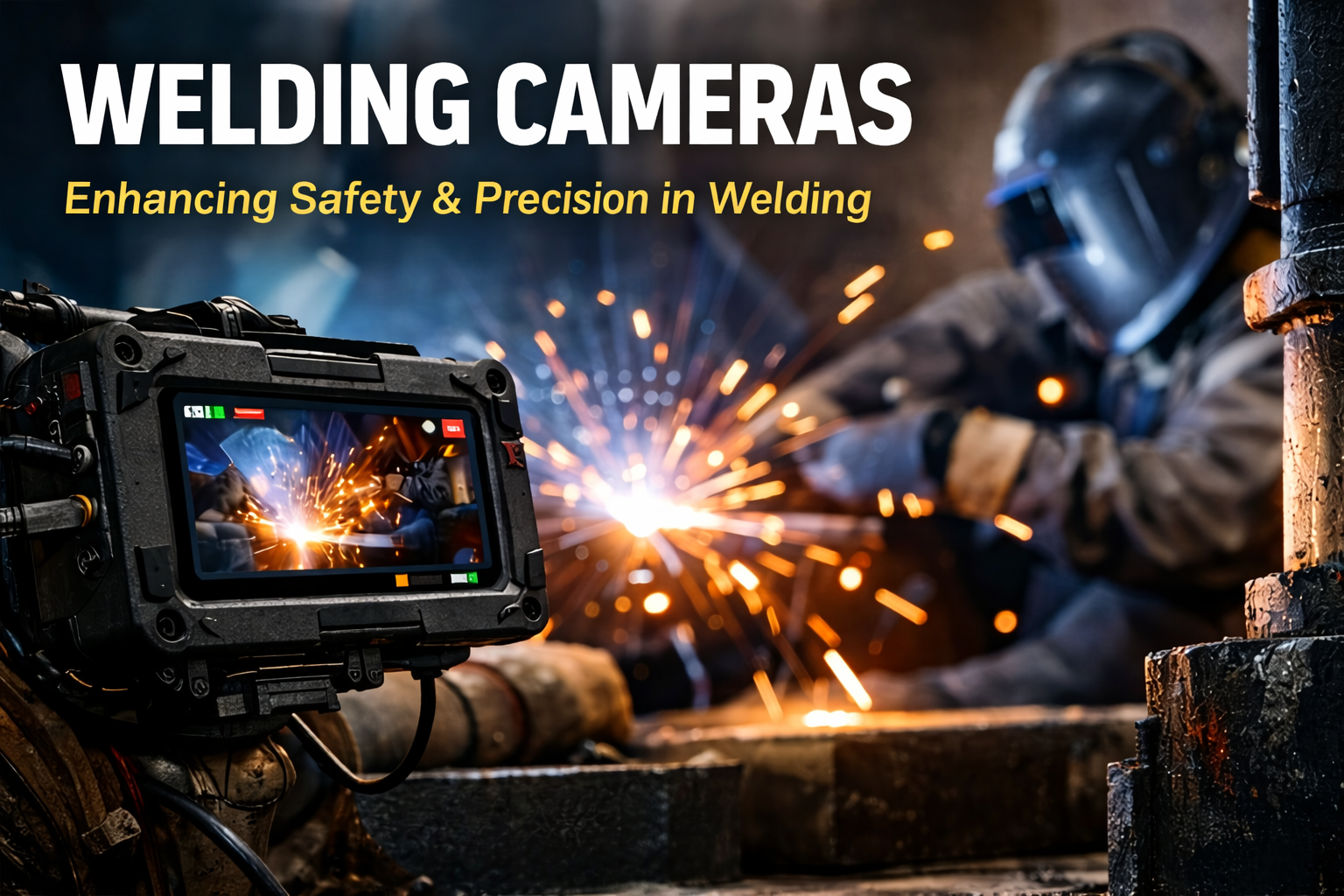
Technology has advanced so much in areas of welding and one of the greatest transformations has been the use of the welding cameras. Operators use specialized cameras to capture clear, real-time images of the welding process, even in harsh environments. No matter what manufacturing sector you are in, be it in industrial manufacturing, pipeline construction or automated robotic welding, the welding cameras come in quite handy in improving accuracy, safety and productivity.
What are Welding Cameras?
These cameras are advanced imaging cameras that are specifically designed to record clear images of welding arcs, molten metal and surrounding objects. These cameras withstand high temperatures, bright light, sparks, and electromagnetic interference that usually occurs in the welding environment, unlike regular cameras.
Manufacturers commonly add high dynamic range (HDR), auto-darkening filters, and protective housing to these cameras to ensure that operators can track the welding process without being physically exposed to dangerous conditions
Welding Cameras are Important in the Contemporary Industry.
Welding cameras have become a necessity in most industries due to the increasing need of accuracy and productivity. The reason why they are important is as follows:
1. Improved Safety
One of the primary benefits of these cameras is enhanced safety. The Welding produces toxic UV radiations, sparks and heat that may be highly hazardous to the workers. Through cameras, operators are able to view the process remotely thus eliminating direct exposure to hazardous conditions.
2. Increased Accuracy
In welding, precision is of utmost importance particularly in the aerospace and automobile production industries. Welding cameras enable the operator to see detailed images on real time which enables the operator to get the weld placement and reduce defects.
3. Better Quality Control
Quality control is made easier with these cameras. The welds can be checked by supervisors who can control the quality of the welds when they occur, detect mistakes immediately and correct them on the spot. This saves time on rework and maintained quality.
4. Enhanced Productivity
Welding cameras enhance workflow since they offer visibility and minimize mistakes. The speed and efficiency of operators increase, and the overall productivity is increased.
Welding Cameras have key characteristics.
Choosing welding cameras, it is necessary to know the characteristics which make them effective:
High Dynamic Range (HDR)
The extreme change in brightness with the HDR technology that the camera can handle includes the brightness of the arc in welding and the darker areas that surround the arc.
Heat Resistance
The temperature of welding conditions may be very high. Good quality cameras are manufactured by using heat resistant materials in order to make them durable.
Protective Housing
These are often rugged cameras which are resistant to sparks, dust and debris.
Remote Monitoring
Lots of welding cameras can be used with remote viewing, which enables operators to see the process safely at a distance with screens or control systems.
Auto-Darkening Technology
It has a feature that regulates the brightness levels automatically to make sure that the welding is clear.
Welding Cameras are used in applications.
The versatility and reliability of welding cameras make them very popular in many industries:
Industrial Manufacturing
Factories use these cameras to observe automated welding processes and ensure consistency and accuracy in mass production.
Pipeline Welding
Welding cameras are a non-hazardous way of keeping an eye on the quality of welds in the remote or dangerous environment, which is especially necessary during pipeline construction.
Robotic Welding
Automated systems incorporate these cameras to track and monitor welds in real time using robots
Underwater Welding
Underwater welding is done with specialized welding cameras that enable the divers and operators to see well in adverse conditions.
Types of Welding Cameras
These cameras come in various types to suit a particular application:
Fixed Welding Cameras
Technicians place them in fixed locations and use them to continually monitor production lines.
Portable Welding Cameras
Portable solutions can be flexible and are good in on-site welding.
Robotic Welding Cameras
They are incorporated into robots that do automated welding jobs.
Inspection Cameras
Inspectors can use them to inspect post-welds, detect flaws, and ensure good quality
The selection of the appropriate Welding Camera.
The choice of the suitable welding camera is based on your needs. Take into account the following aspects:
- Environment: You should select a camera that will withstand your working environment such as heat and dust.
- Resolution: The more the inspection the higher the resolution of the image.
- Connectivity: The camera should be able to connect to remote surveillance and also to be compatible with the currently existing systems.
- Durability: Find tough designs that will withstand rough usage.
- Budget: Balance functions and expenditure to find the most value to your investment.
Trends in Next-Generation Welding Camera.
The welding cameras have a bright future, as technology keeps on developing. Engineers are integrating artificial intelligence (AI), machine learning, and real-time analytics into welding systems.” These technologies will make it possible to detect defects automatically, predictively maintain, and even smarter automation.
Also, the development of camera resolution and connectivity will also increase the ability to monitor remote welding, which will make the welding activities safer and more effective than ever.
Conclusion
In the modern industrialized society, welding cameras have taken the centre stage in enhancing safety, accuracy, and efficiency. These cameras allow minimizing risks, improving quality and simplifying operations by providing real-time visual images on the welding process.
Being in the manufacturing, construction field, or automated welding systems, the appropriate welding camera can greatly enhance your working process. With the ever changing technology, these cameras will be even more involved in determining the future of the welding process.